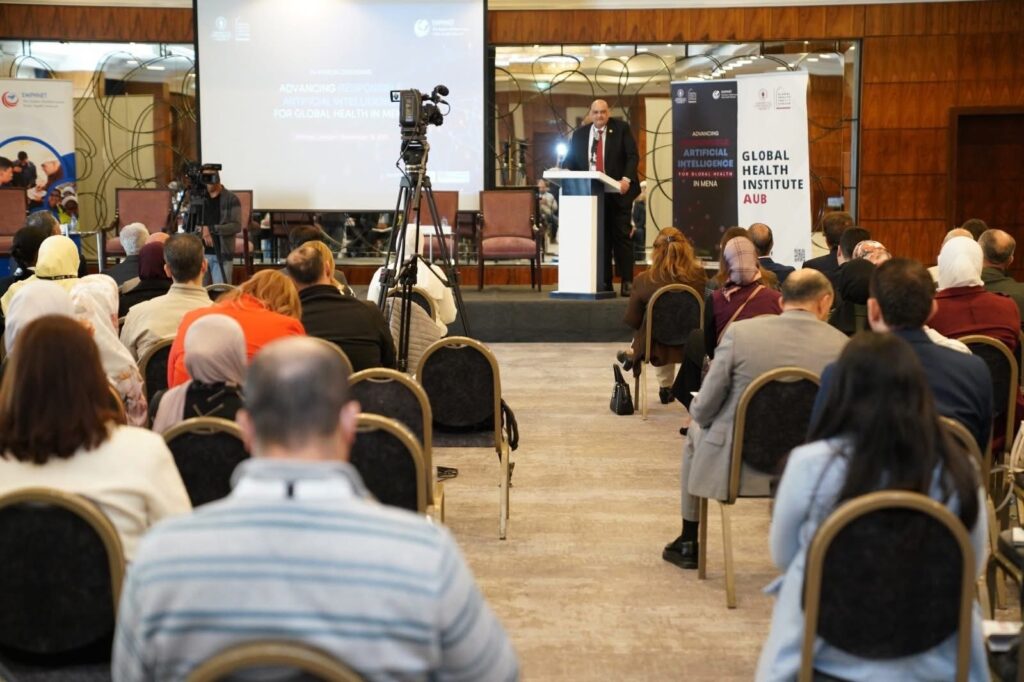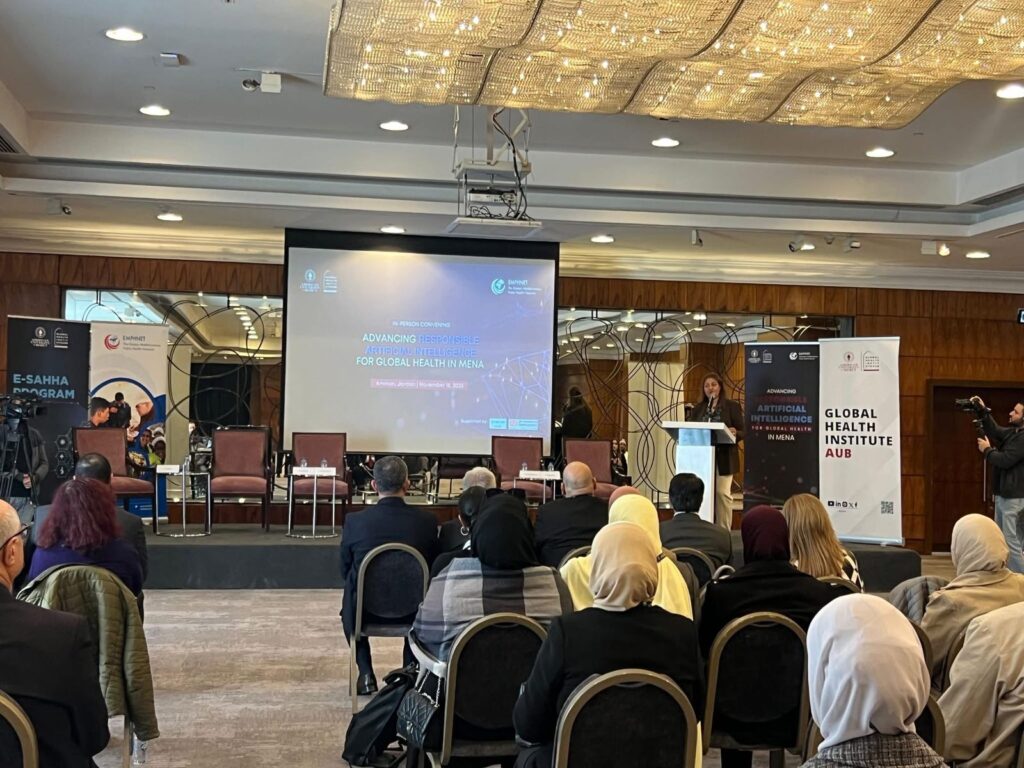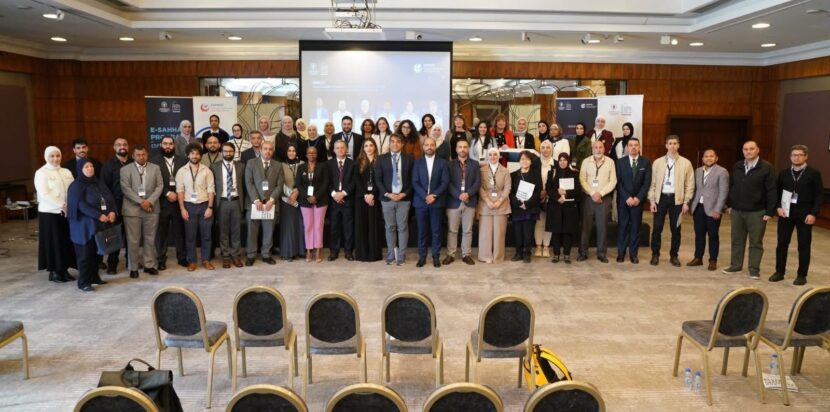
The team from Intermediaries of Change Center for Sustainable Development is participating in the Responsible Artificial Intelligence Development Conference for Global Health in the Middle East and North Africa region.
Amman – The Jordanian capital today hosted a prominent regional event dedicated to promoting the adoption of responsible artificial intelligence in the global health sector in the Middle East and North Africa region. Organized by the Global Health Initiative (GHI) at the American University of Beirut (AUB), the event brought together more than 90 experts, researchers, and decision-makers from within and outside the region. The event was held in collaboration with the Middle East Public Health Network (EMPHNET) and with support from IDRC/CRDI and FCDO.
The conference featured a wide range of themes and scientific sessions, including: responsible artificial intelligence for global health; global perspectives on responsible AI applications; the challenges of reconciling AI’s potential with the reality of limited resources; and discussions on enhancing health outcomes through responsible AI in low-resource settings.
During the sessions, participants engaged in interactive dialogues focused on ways to harness AI responsibly to improve health outcomes, emphasizing the need for robust governance frameworks that consider local contexts and foster collaboration between academia, policymakers, and executive institutions.
During her participation in the event, Operations and Programs Specialist Reham Al-Qudah emphasized the vital role of civil society organizations in supporting the adoption and development of artificial intelligence in a way that aligns with Jordan’s healthcare system. She stressed the importance of keeping pace with the rapid advancements in the health sector to ensure sustainable healthcare that can mitigate the risks of chronic diseases and epidemics, as well as facilitate medical diagnosis for various conditions, particularly those related to women’s health, pregnancy, and childbirth.
The event concluded by emphasizing the need to strengthen joint work between regional and international bodies to develop a clear and integrated vision for responsible artificial intelligence in the health sector, and to build more efficient, equitable and sustainable health systems, thereby contributing to enhancing countries’ ability to face future health challenges.