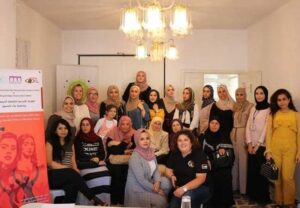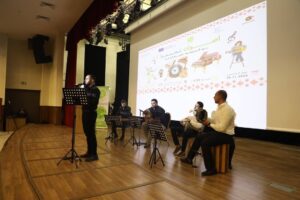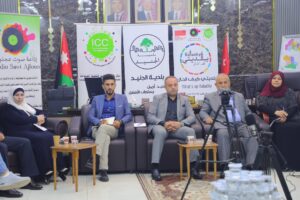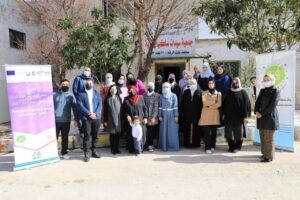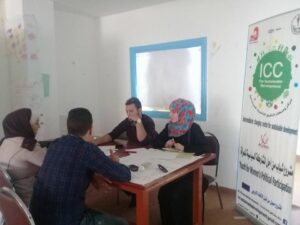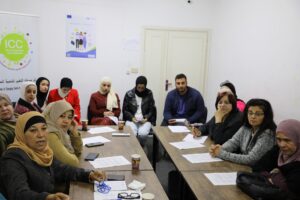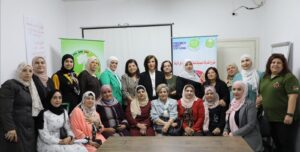
The Center for Change Mediators for Sustainable Development is an active member of the Youth, Peace, and Security Coalition. Through this membership, it contributes to national efforts aimed at enhancing youth participation in peacebuilding processes and maintaining community security. The Center works in collaboration with its coalition partners to implement programs and initiatives aimed at consolidating a culture of dialogue, preventing conflict, and enhancing social cohesion. The Center also seeks to integrate youth perspectives into public policies related to peace and security, based on its belief in the importance of youth as essential partners in achieving sustainable development and community stability.
The Center operates at the local and national levels through a wide range of programs and projects aimed at promoting sustainable development, empowering youth and women, supporting education, protecting the environment, and promoting a culture of human rights. The Center’s philosophy is based on integrating field work, advocacy, and influencing public policies, based on the principles of transparency, governance, social justice, and community participation.
Alignment of the Center’s Work with Security Council Resolution 2250
Since the adoption of Resolution 2250, the Center has sought to align its programs and initiatives with its five pillars. The Center has adopted a comprehensive approach that combines political participation, community protection, conflict prevention, partnership building, and economic and social reintegration, through practical field projects in Jordanian villages and rural areas.
1. Participation: The Center works to empower youth and women to participate in public life and decision-making through leadership programs, community media, and political dialogue. It has launched initiatives such as “Rural Youth Space” and “Rural Women: A Voice of Political Importance,” which provide safe spaces for youth and women to express themselves and participate in shaping development and political priorities.
2. Protection: The Center implements awareness-raising programs to protect youth from violence, extremism, and marginalization, with a focus on vulnerable groups in rural areas. It has also contributed to promoting a culture of human rights and gender equality through media and community campaigns in partnership with local and international organizations.
3. Prevention: The Center seeks to address the root causes of community conflict through education, dialogue, and economic development. It also implements prevention projects that promote social justice and support safe learning environments for children and youth, such as the “Steps to Improve Education in Rural Areas” project.
4. Partnerships: The Center builds a broad network of partnerships with national and international institutions such as the European Union, the Friedrich Ebert Foundation, the Rosa Luxemburg Foundation, the Norwegian Embassy, and others. These partnerships foster the exchange of expertise and expand the scope of impact to achieve sustainable peace goals.
5. Reintegration: The Center places special emphasis on the economic and social integration of women and youth through community entrepreneurship and sustainable agriculture projects. Projects such as “Rural Women Are More Resilient in Poverty Pockets” have contributed to creating job opportunities, improving living conditions, and strengthening the independence of rural women.


 It is a community radio station aiming to create social dialogue using social media and community media to address the social, economic, political, cultural, and environmental challenges faced by youth, women, marginalized groups, and regions in the governorate. The station works to raise awareness about human rights concepts, the Sustainable Development Goals, and community participation in achieving them. It also promotes the principles of dialogue, youth engagement in public affairs, decision-making mechanisms, good governance, and accountability, while opening channels of communication between citizens and decision-makers.