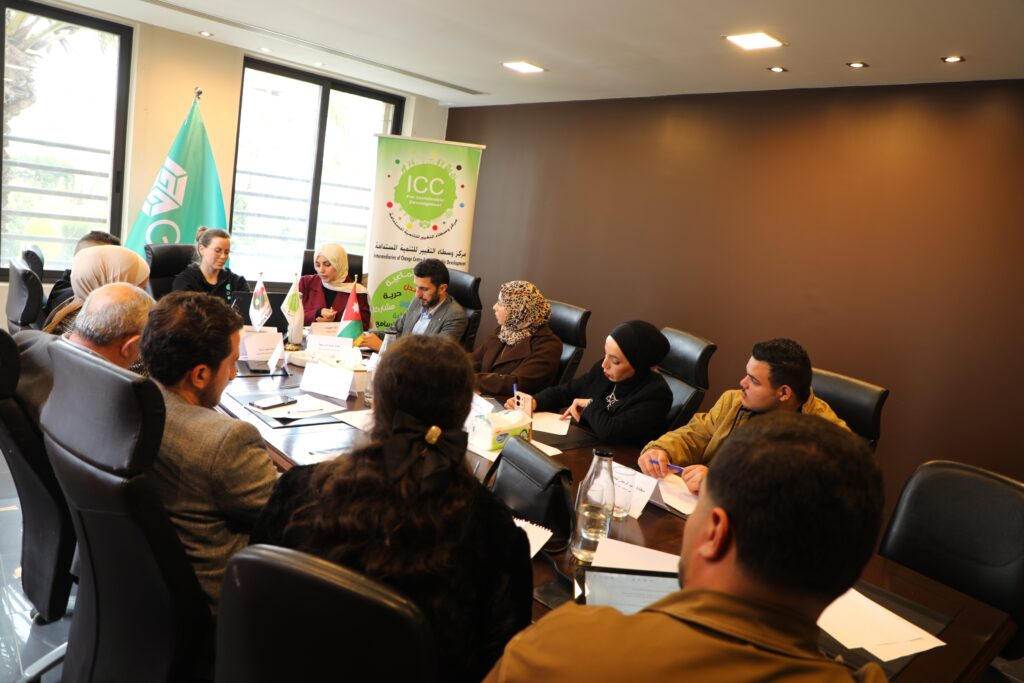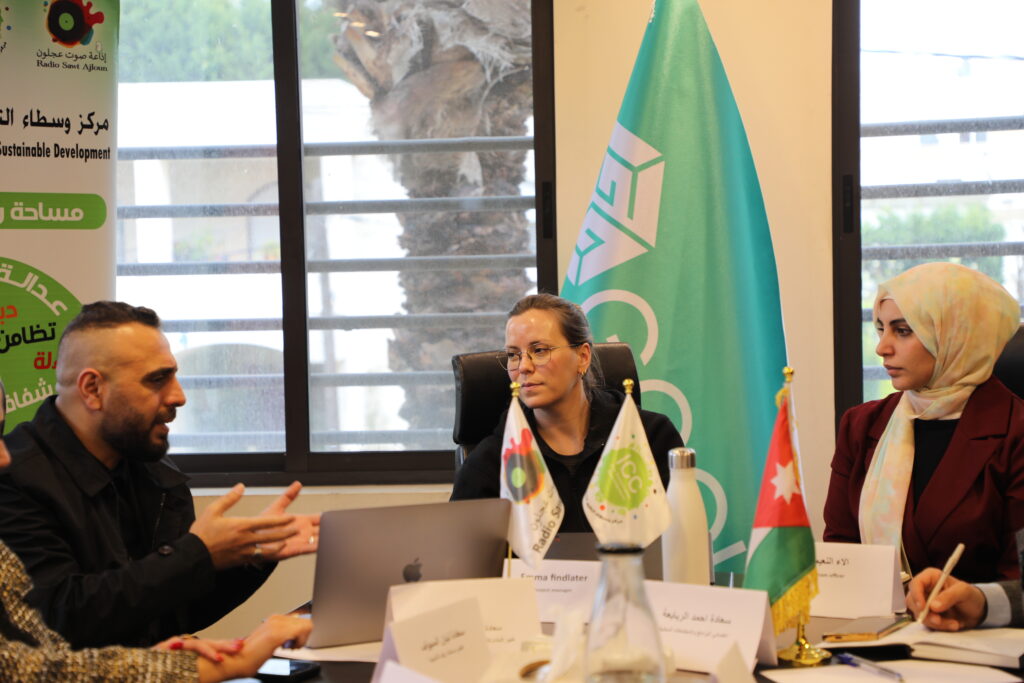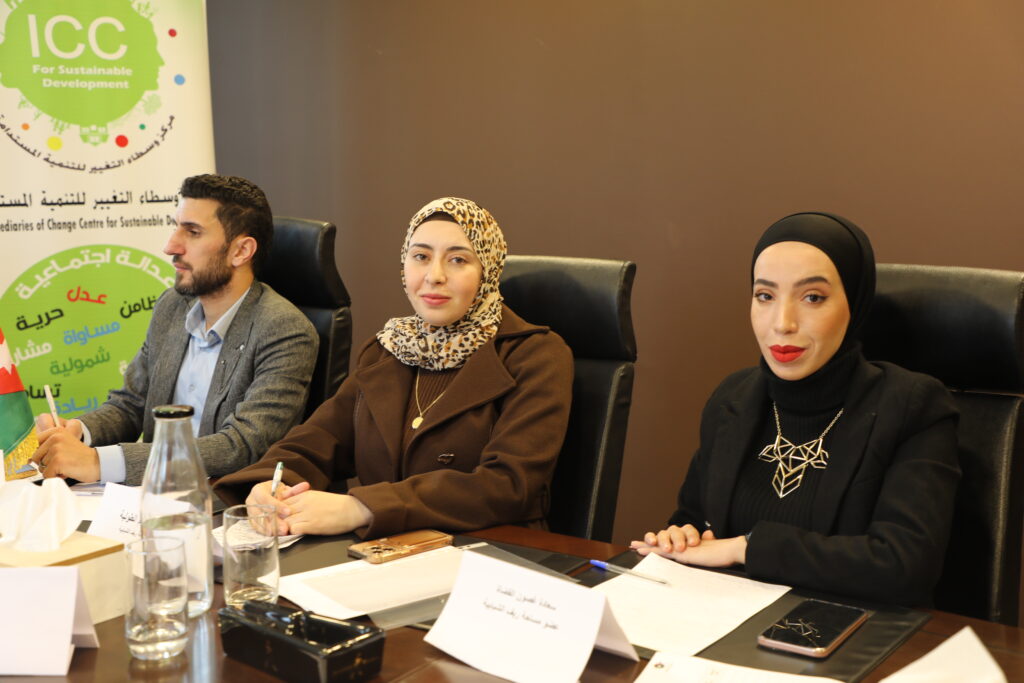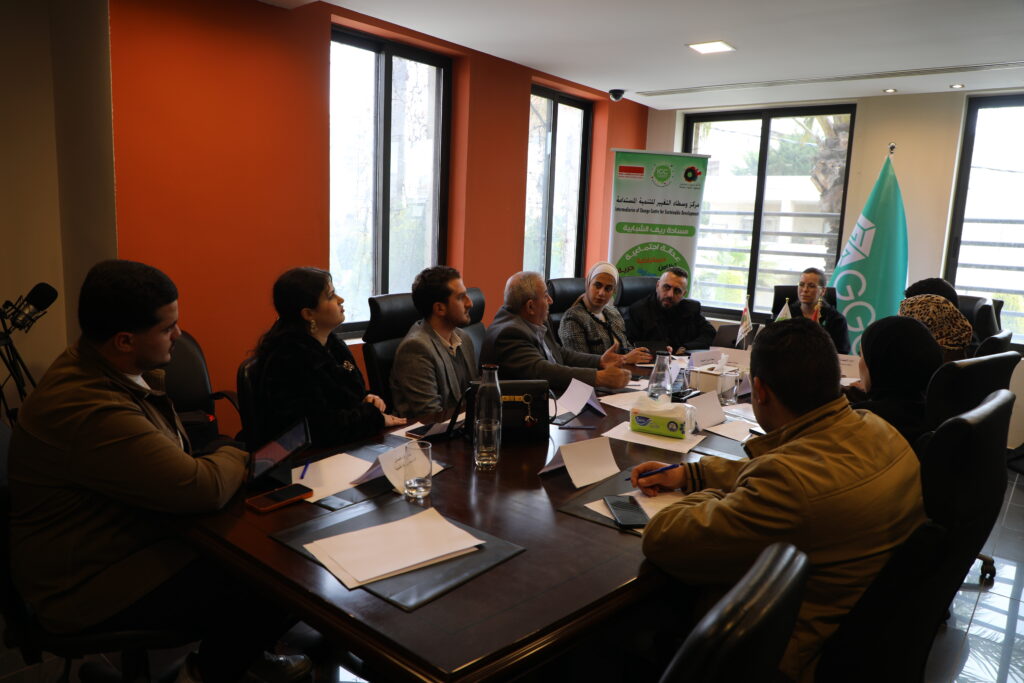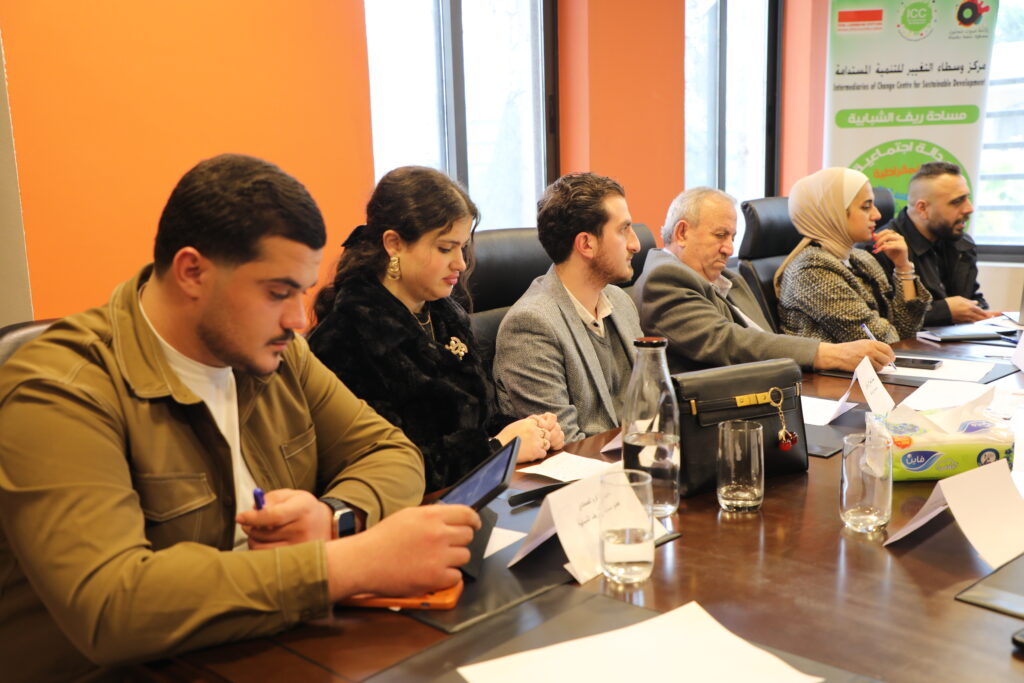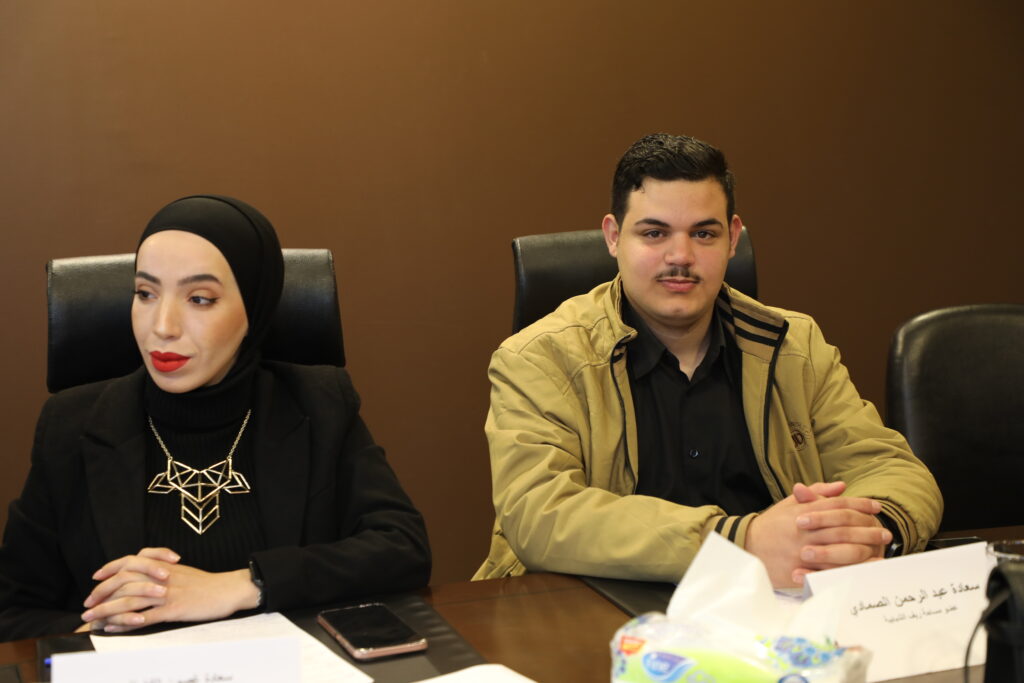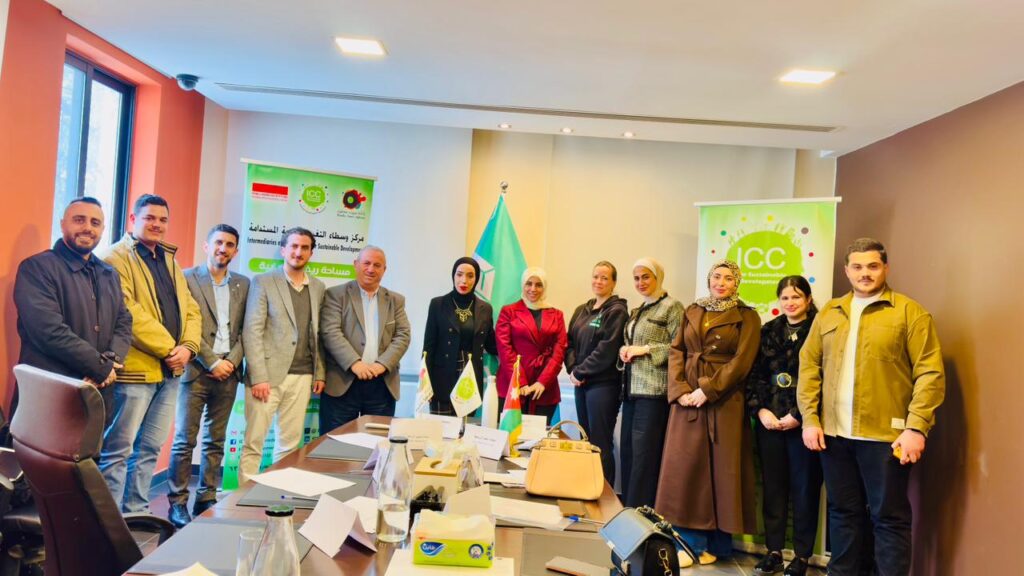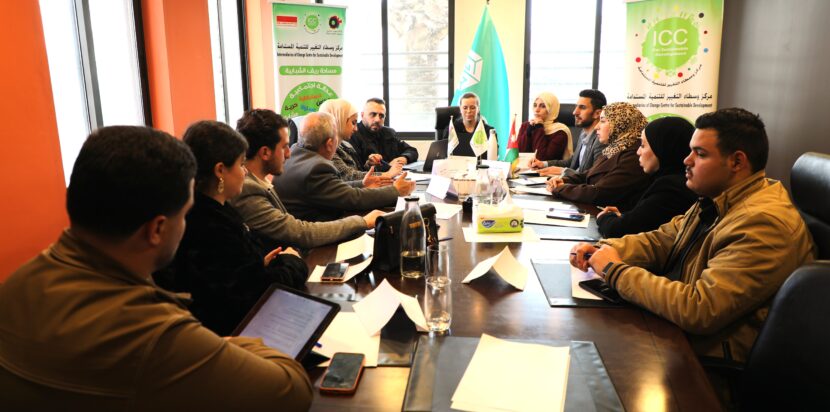
Young leaders from the “Safe Rural Youth Political Space” hold a dialogue on supporting entrepreneurship and sustainable development in rural communities.
Intermediaries of Change Center for Sustainable Development, in partnership with Ajloun Community Radio and in cooperation with the German Rosa Luxemburg Foundation, organized a youth dialogue that brought together young leaders who are members of the “Safe Rural Youth Political Space” with representatives of the Global Green Growth Institute, with the aim of discussing the reality of employment and training, and highlighting the skills gap among young people, especially those with entrepreneurial ideas and university graduates. The dialogue focused on the fields of green entrepreneurship, including sustainable agriculture, renewable energy, recycling, and adventure tourism (cultural and digital), as promising sectors that can contribute to creating sustainable job opportunities in rural communities.
The dialogue included Ms. Emma Findlater, the project manager, and Ms. Alaa Al-Naimat, the project coordinator at the Global Green Growth Institute, along with the management of the Center for Change Agents and the team and members of the “Safe Youth Political Rural Space” project.
The Executive Director of Intermediaries of Change Center for Sustainable Development Suhaib Ahmad Rababa’a, highlighted the center’s role in supporting youth across various sectors and green spaces. He emphasized that “Reef Space” provides an active platform for young people to express their needs and offer practical proposals. He explained that engaging them in dialogue with official bodies contributes to developing more responsive policies and enhances their ability to address economic and social challenges, particularly in the areas of employment and training. This is achieved by directly linking training and qualification programs to labor market needs and equipping young people with the skills required in promising sectors such as sustainable agriculture, renewable energy, recycling, and adventure tourism.
Rababa’a added that providing business incubators and technical and financial support programs enables young people to transform their entrepreneurial ideas into viable, scalable, and sustainable projects, fostering a culture of innovation and entrepreneurship that contributes to creating quality job opportunities and strengthening the local economy in rural communities. He also emphasized that engaging young people in ongoing dialogue with official bodies and local and international institutions ensures the development of policies and programs that are more responsive to their needs and enhances their ability to face challenges and achieve sustainable development.
The dialogue was moderated by Dr. Maram Al-Tawalbeh, a member of the Rural Space, who reviewed the role of the “Safe Youth Political Rural Space” as an effective platform for empowering youth in rural communities, by providing a supportive environment that enhances their participation in dialogue and decision-making, and contributes to conveying their voices and needs to the concerned authorities. She emphasized the importance of investing in the energies of youth, and building effective partnerships with local and international institutions, which contributes to expanding the scope of programs and initiatives that support them, and turning their ideas into feasible projects, with a focus on linking training and qualification programs to the actual needs of the labor market, to ensure that young people are equipped with the necessary skills to enter the labor market and compete in it, especially in rural communities.
Al-Tawaleh also stressed that young people are the main driver of positive change, and that investing in them is an investment in a more sustainable and just future. She emphasized the importance of the outputs and recommendations of the youth dialogue, stressing the need to work on transforming them into practical solutions based on partnership and networking with civil society organizations, the private sector, and government institutions, in order to enhance the empowerment of young people, meet their needs, and qualify them to access sustainable job opportunities.
For her part, Ms. Alaa Al-Nuaimat of the Global Green Growth Institute stressed the importance of youth initiatives in providing real spaces to empower young people and enhance their participation in development issues, noting that partnership between local and international institutions, and cooperation with the public and private sectors, constitute a fundamental pillar for developing the skills of young people in line with the requirements of the labor market, especially in the areas of the green economy.
Al-Nuaimat explained that these efforts contribute to expanding the horizons of cooperation, transforming youth ideas into sustainable entrepreneurial projects, in addition to promoting innovation in rural communities, praising the level of constructive interaction by the participants, which reflects an advanced awareness among young people of development issues.
For his part, the project manager, Ahmed Abdel Qader, affirmed that this dialogue represents a qualitative experience in empowering rural youth to actively participate in designing training and qualification programs, and opening direct communication channels with decision-makers. He pointed out the importance of providing a safe environment that enhances youth participation in dialogue and decision-making, especially in issues related to the green economy and climate change, explaining that the “Safe Rural Youth Political Space” represents an integrated platform for building the capacities of young people and developing their skills in leadership, advocacy and green entrepreneurship.
During the dialogue, the young leaders discussed a number of key issues related to green entrepreneurship, most notably the importance of developing training programs and linking them to the needs of the labor market, and investing in promising sectors such as sustainable agriculture, climate change and adventure tourism, given their role in creating job opportunities and strengthening the local economy. They also stressed the need to provide business incubators and technical and financial support programs to enable young people to turn their ideas into sustainable projects, and to promote a culture of innovation and entrepreneurship among them.
It is worth mentioning that the “Safe Youth Political Rural Space” operates under the umbrella of Intermediaries of Change Center for Sustainable Developmentt, in partnership with the Ajloun Community Radio, and in cooperation with the Rosa Luxemburg Stiftung, and aims to promote the developmental and civic participation of youth in rural communities, and to enable them to contribute effectively to achieving sustainable development.