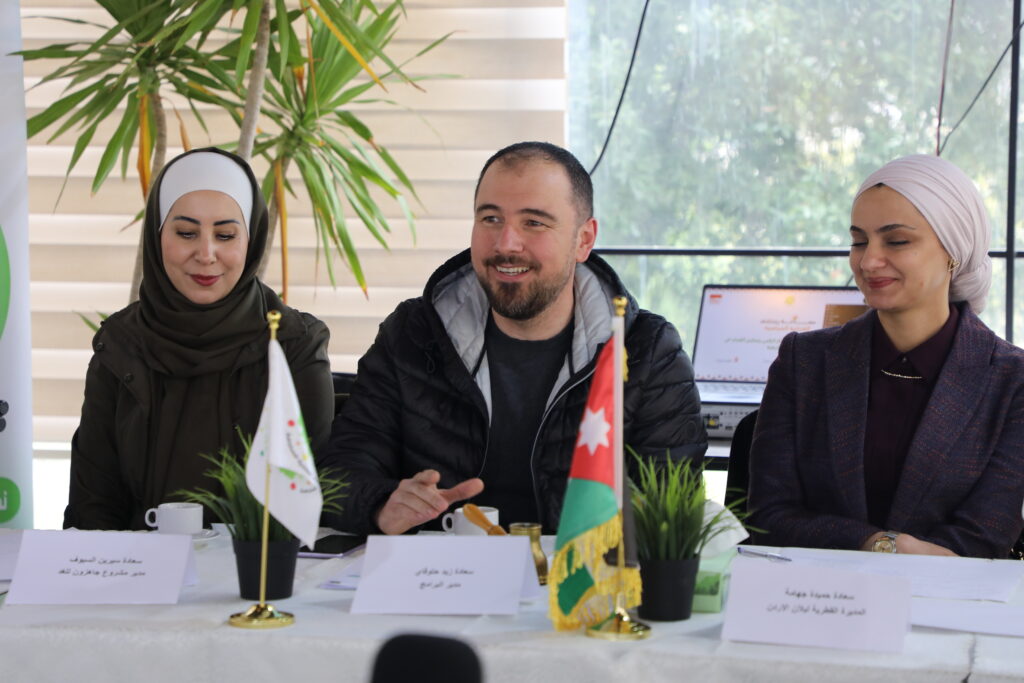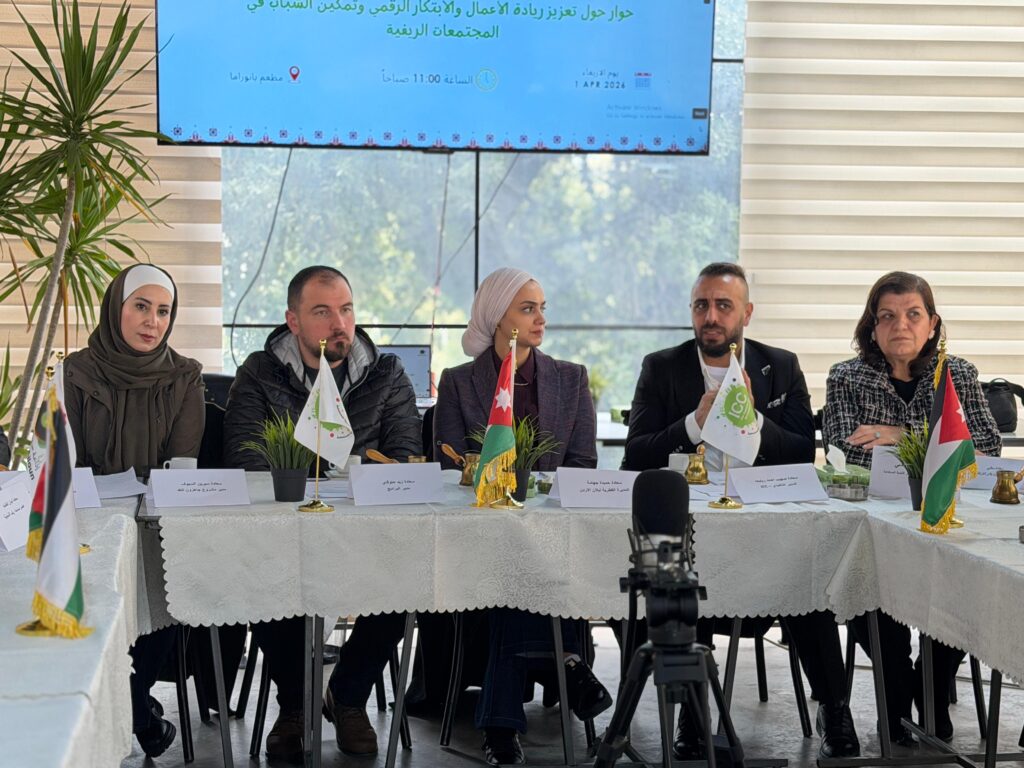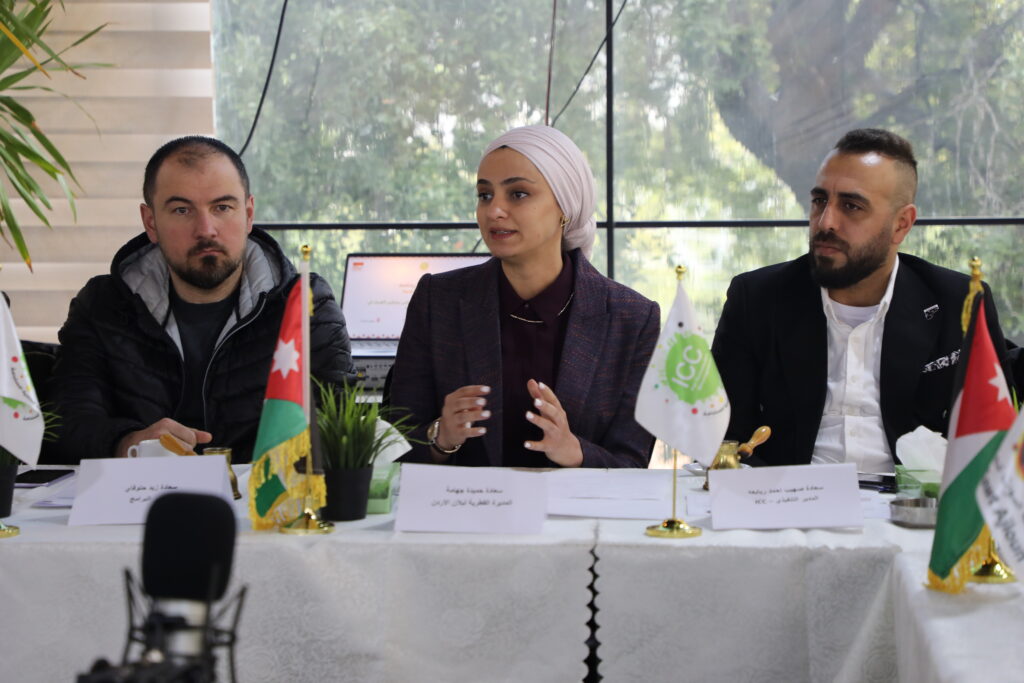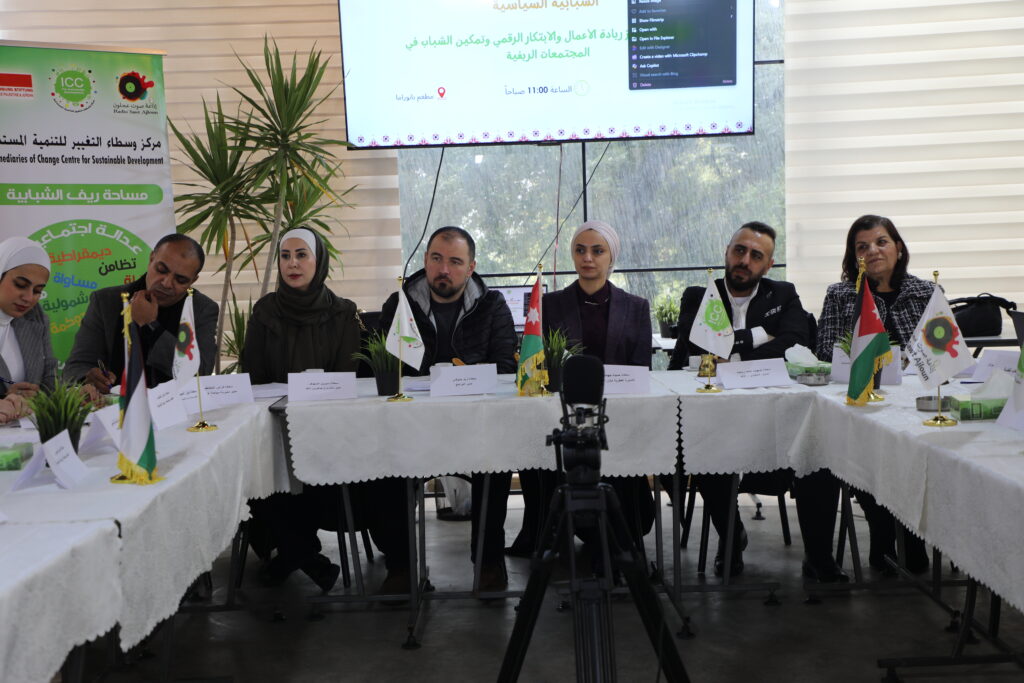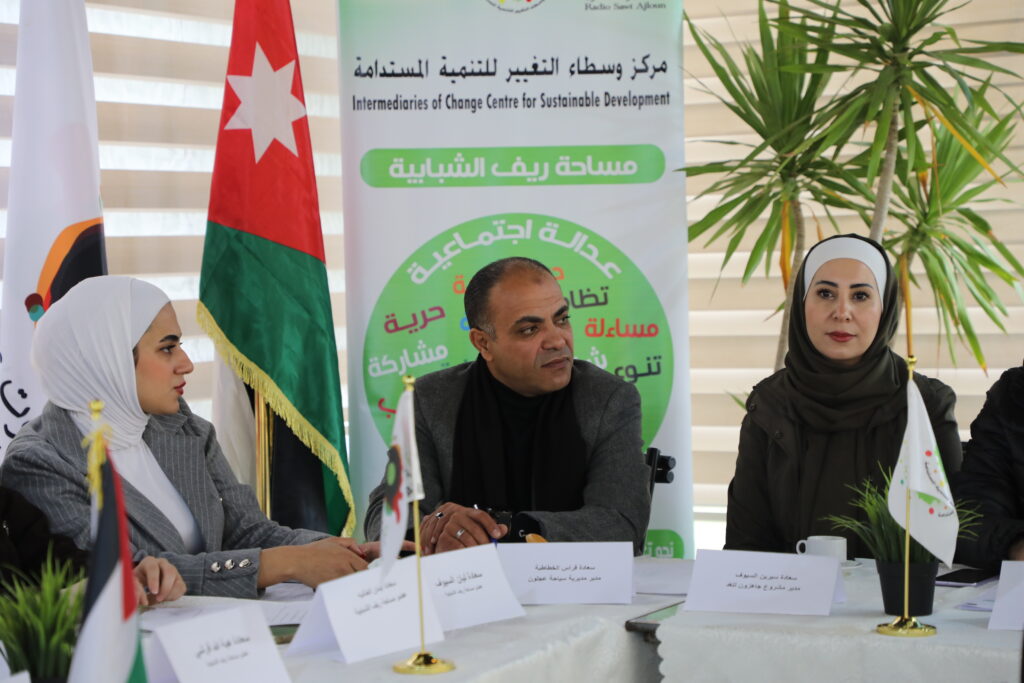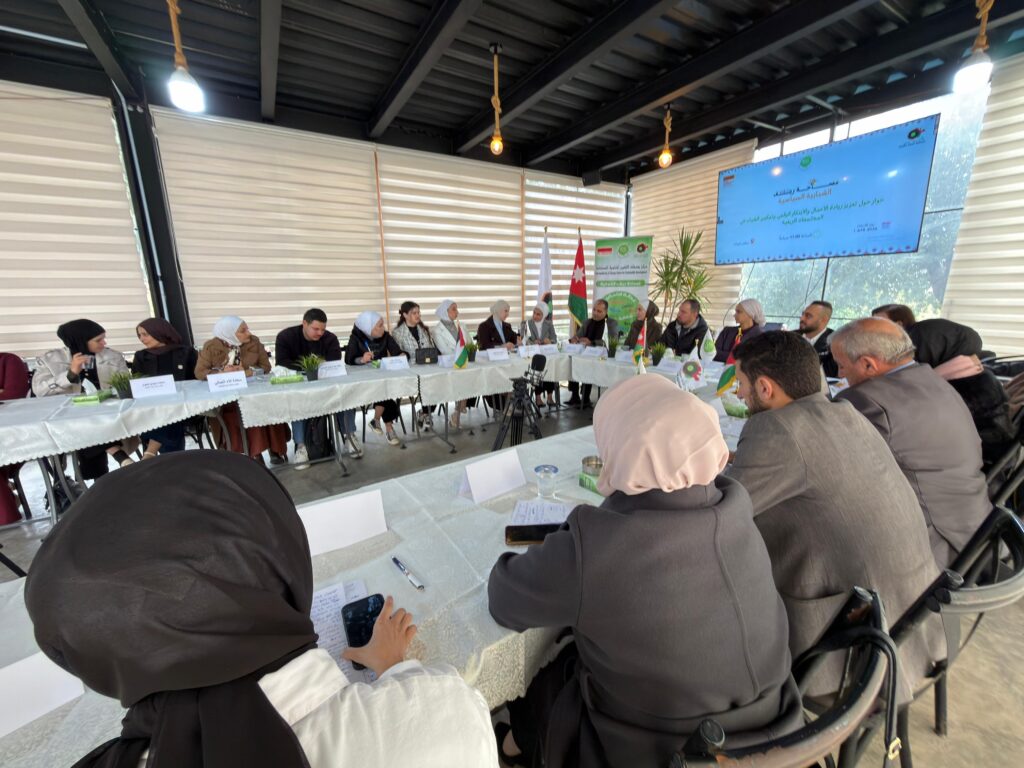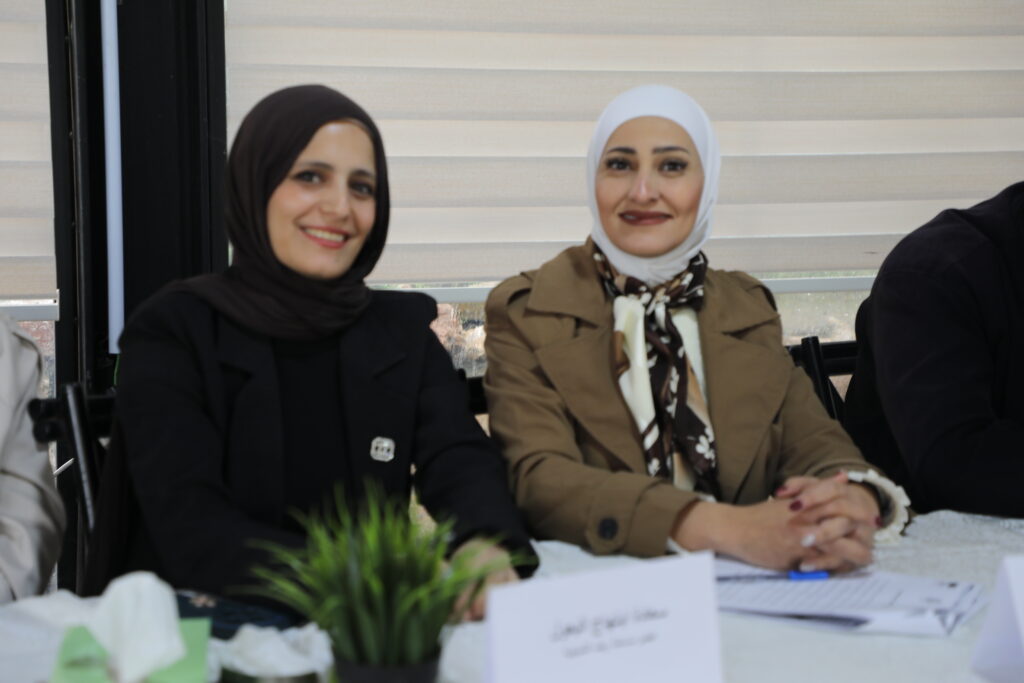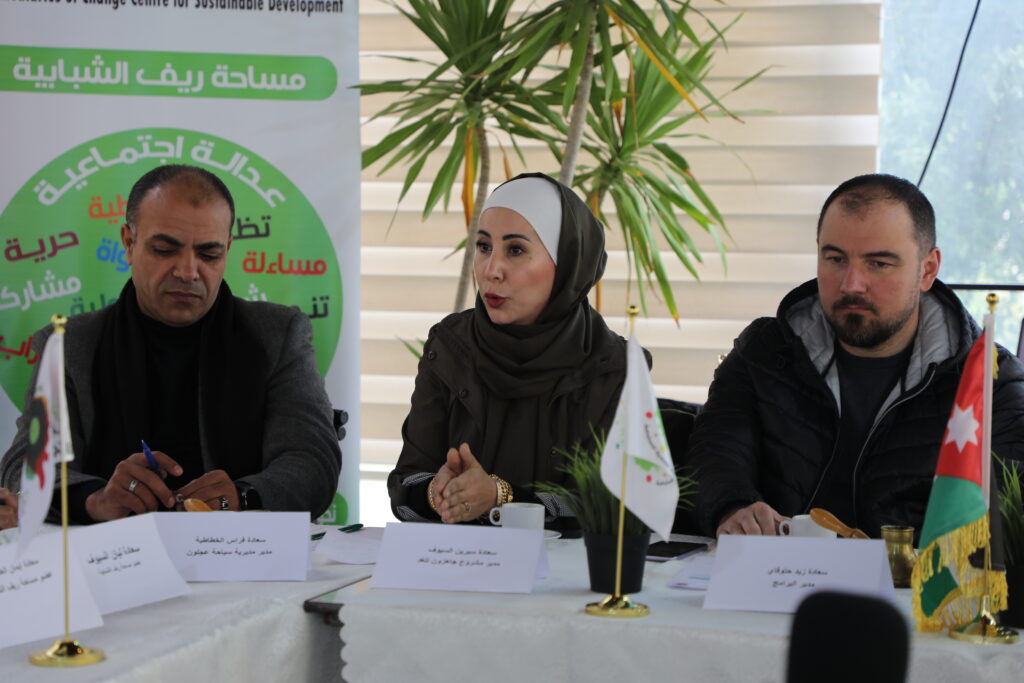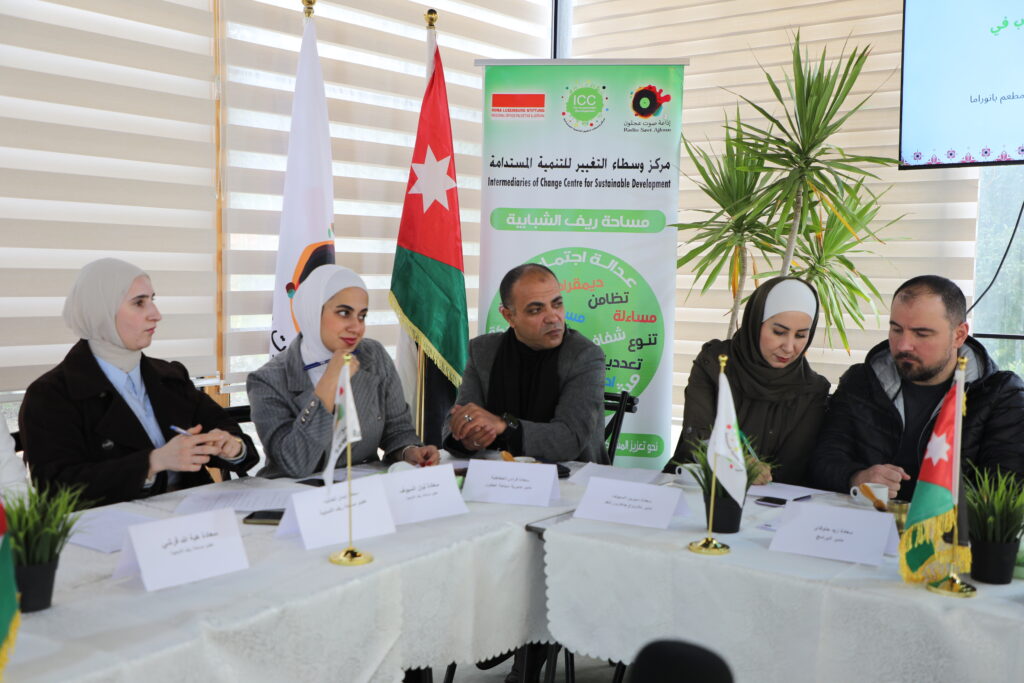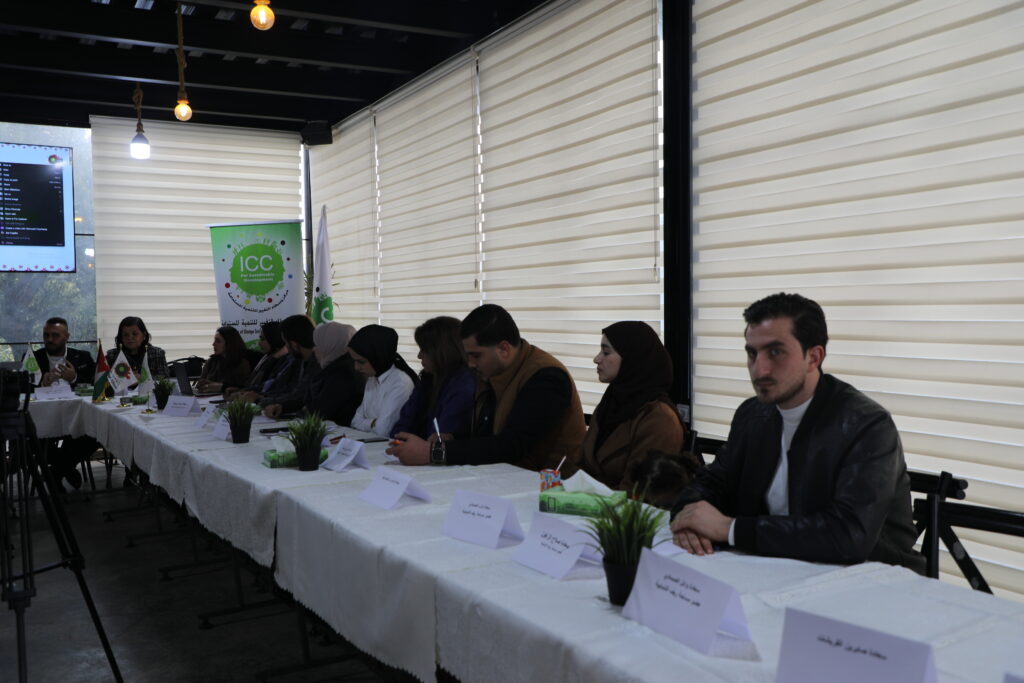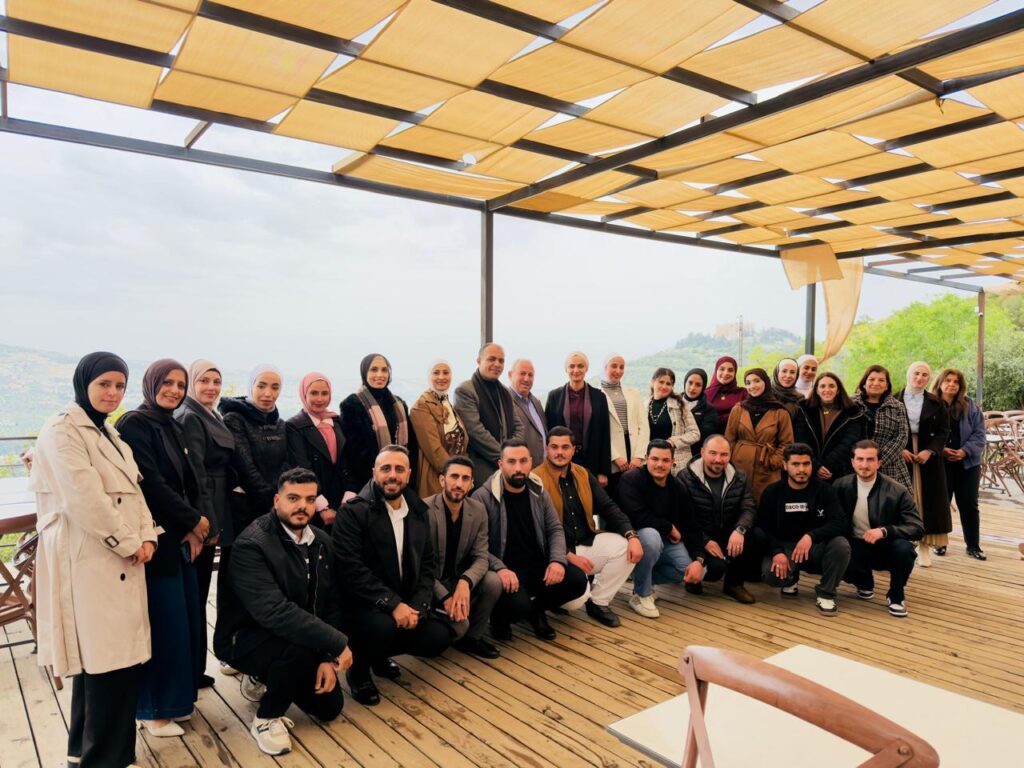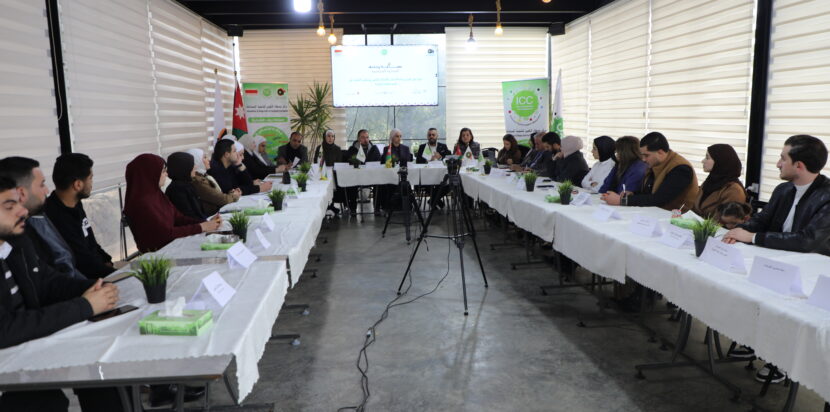
Young leaders in the “Safe Rural Youth Political Space” hold a dialogue on promoting entrepreneurship, digital innovation, and youth empowerment in rural communities.
Intermediaries of Change Center for Sustainable Development in partnership with Ajloun Community Radio and in cooperation with the German Rosa Luxemburg Foundation, organized a participatory youth dialogue meeting that brought together young leaders who are members of the “Safe Political Youth Rural Space”, with the management of Plan International, the management of the Center for Change Agents, and the team of Ajloun Community Radio.
This meeting comes within the framework of strengthening the role of youth in leading development paths. It aimed to discuss the priorities of young men and women in Ajloun Governorate and explore the possibility of designing specialized training programs that contribute to bridging the skills gap among youth, especially those with entrepreneurial ideas and graduates of entrepreneurial and digital fields, thereby supporting innovation and enhancing employment opportunities in rural communities. The meeting also emphasized the importance of supporting youth initiatives and empowering them to transform into sustainable entrepreneurial projects through effective partnerships with supporting institutions.
The dialogue included: Hamida Jahama, Country Director of Plan International – Jordan, Zaid Hatouqai, Programs Director, and Sirin Al-Sayouf, Project Manager of “Ready for Tomorrow”, along with Sally Bisharat and Fathi Hamdan from the communications team, in addition to the management of the Center for Change Agents and the team and members of the “Safe Youth Political Rural Space” project.
The dialogue was moderated by Rural Space member, Lian Al-Sayouf, who emphasized in her intervention the vital role played by the “Safe Youth Political Rural Space” in empowering young people in rural communities, by providing an interactive environment that enhances their participation in dialogue and decision-making, and supports the development of their skills in entrepreneurship and digital innovation, which contributes to conveying their voices and needs to decision-makers in an institutional and organized manner.
For her part, Ms. Hamida Jahama emphasized the importance of the partnership with Intermediaries of Change Center for Sustainable Development, expressing Plan International’s pride in being part of the center’s youth empowerment journey and supporting its efforts to develop young people’s capabilities and open new horizons for them. She pointed to the importance of adopting a holistic approach in designing training programs, starting from the pre-university stage and continuing throughout studies and after graduation, with a focus on entrepreneurial and digital skills and labor market demands. She also reviewed the organization’s efforts in supporting and empowering young people, transforming their ideas into sustainable entrepreneurial projects, and promoting a culture of innovation in rural communities, praising the level of awareness and engagement of the participants.
For his part, Suhaib Ahmad Rababa’a, Executive Director of the Center for Change Agents, highlighted the center’s role in supporting and empowering youth within specialized entrepreneurial spaces, particularly in the fields of entrepreneurship and digital innovation. He emphasized that “Reef Space” represents an effective model for youth spaces that allow young people to express their needs and offer practical solutions. He added that engaging youth in direct dialogues with institutions contributes to developing programs that are more responsive to their needs and links training outcomes with labor market demands, especially in promising sectors such as technology, the digital economy, and innovative entrepreneurial projects.
For her part, Sirine Al-Sayouf emphasized the importance of building genuine partnerships with youth and civil society organizations, expressing her pride in the achievements made through joint programs. She noted that a series of specialized training sessions in entrepreneurship, developing entrepreneurial ideas, artificial intelligence, and digital innovation, along with practical simulation exercises, will be implemented in the coming period. She also stressed the importance of working with young people to identify their issues and priorities, praising the efforts of the “Youth Rural Space” in identifying the challenges facing youth in rural communities and working to address them through innovative methods.
For his part, Zaid Hatouqai highlighted the achievements of the “Safe Youth Political Space in the Countryside,” emphasizing that young people are the primary drivers of development and that their role extends beyond mere participation to accurately identifying their communities’ priorities and needs. He also stressed the importance of investing in young people’s entrepreneurial ideas, developing them, and transforming them into viable projects that contribute to job creation and enhance their integration into the labor market, especially in light of rapid digital transformations.
Firas Khatatbeh, Director of the Ajloun Tourism Directorate, highlighted the importance of partnerships with local community organizations and the private sector, and their role in supporting entrepreneurial ideas among young people in the governorate. This contributes to developing the tourism sector and enhancing its contribution to the local economy. He emphasized the need to invest in diversifying the tourism product, particularly in the areas of qualified tour guides, handicrafts, and ecotourism, and to work on developing Ajloun’s cultural tourism identity to reflect its historical and natural heritage. He also stressed the importance of showcasing integrated tourism experiences that combine nature, culture, and heritage, providing visitors with a unique experience and encouraging them to extend their stay in the governorate.
Khattabeh emphasized the importance of empowering youth to enter the tourism sector through training and qualification in areas such as tour guiding, tourism project management, and digital marketing, keeping pace with the sector’s modern transformations. He also called for supporting youth initiatives that offer innovative solutions, such as creating digital platforms to promote tourist sites, organizing interactive tourist routes, and linking tourism with local products and traditional crafts. He stressed that developing the tourism sector in Ajloun requires integrated efforts between government agencies, the private sector, and the local community, along with providing a supportive environment for tourism entrepreneurship through business incubators and small and medium-sized enterprise (SME) financing programs that help young people transform their ideas into sustainable projects that contribute to creating real job opportunities.
For his part, the project director, Ahmed Abdelkader, affirmed that this dialogue represents a significant milestone in empowering rural youth by directly involving them in designing training programs related to entrepreneurship and digital innovation, and by opening effective communication channels with supporting institutions. He pointed to the importance of providing a safe and stimulating environment that enables young people to express and develop their ideas, especially in the fields of green economy and modern technology. He explained that the “Safe Rural Youth Political Space” represents an integrated platform for building young people’s capacities in leadership, advocacy, entrepreneurship, and digital innovation, thus enhancing their readiness for the job market.
Project coordinator Reham Al-Qudah also highlighted the importance of providing business incubators and technical and financial support programs that enable young people to transform their entrepreneurial ideas into viable, scalable, and sustainable projects. These programs foster a culture of innovation and entrepreneurship, contributing to the creation of quality job opportunities and strengthening the local economy in rural communities. She emphasized that engaging youth in ongoing dialogue with official bodies and local and international institutions contributes to developing policies and programs that are more responsive to their needs and enhances their ability to address challenges and achieve sustainable development.
During the dialogue, the young leaders engaged in an in-depth and effective development discussion, reflecting their advanced level of awareness regarding entrepreneurship and digital innovation issues in rural communities. The participants presented practical visions for developing an integrated system to support young people, starting with education and qualification, passing through practical training, and reaching economic empowerment. They also discussed the importance of designing quality training programs based on actual market needs, and enhancing applied skills such as entrepreneurial thinking, teamwork, and project management, in addition to modern digital skills. They emphasized the need to integrate technology into various productive sectors, especially in smart agriculture and rural tourism, in a way that contributes to creating innovative and sustainable job opportunities.
The young leaders also pointed to the importance of supporting the innovation environment by establishing incubators and business accelerators in rural areas, providing funding and technical guidance, and connecting young people to local and international markets, which enhances the chances of success for their projects. They also stressed the role of supportive policies in stimulating digital entrepreneurship and enabling young people to benefit from digital transformation as a tool for economic and social development.
It is worth mentioning that the “Safe Youth Political Rural Space” operates under the umbrella of Intermediaries of Change Center for Sustainable Development, in partnership with the Ajloun Community Radio, and in cooperation with the German Rosa Luxemburg Foundation, and aims to promote the developmental and civic participation of youth in rural communities.