


The Deprived Generation: The Right to Opportunity, Dignity, and Participation
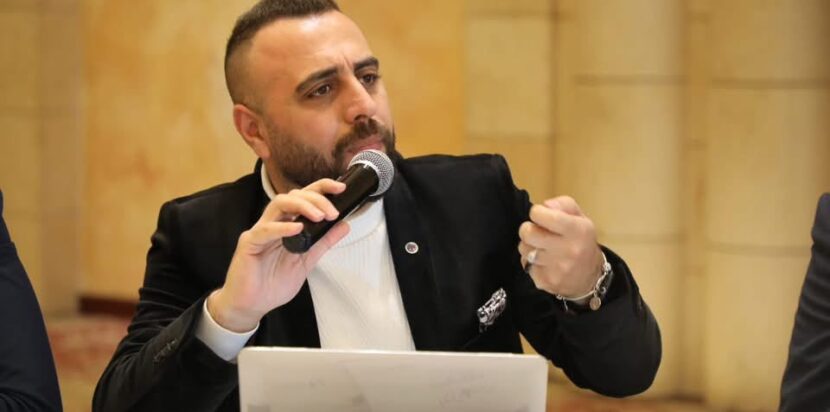
The Executive Director of the Intermediaries of Change Center for Sustainable Development and Radio Sawt Ajloun, Suhaib Ahmad Rababa’a, wrote this article on the occasion of International Youth Day, offering a rights-based and development-oriented perspective on the reality of Jordanian youth. The article draws a comparison between the UN messages on youth rights and participation and the challenges faced by young people in the Jordanian context, particularly in rural and marginalized communities, from the perspective of social justice and the right to opportunity, dignity, and participation.
On International Youth Day, it is easy to repeat the phrases that describe young people as the leaders of the future, agents of change, and drivers of development. But the more difficult—and more responsible—question is: What future are we asking young people to lead if some of them do not even have a fair opportunity to reach it? The United Nations Secretary-General notes that young people are already at the forefront as organizers and innovators, and that moving forward requires equipping them with the skills that will shape the future, from critical thinking and problem-solving to digital literacy. Yet I believe the issue goes beyond skills alone. We cannot teach a young person to think critically and then restrict the space for their voice when they express criticism. Nor can we invite them to participate and then limit their role to mere symbolic presence. And we cannot speak to them about innovation and entrepreneurship while they lack equitable access to financing, technology, and networks of opportunity.
The youth issue today is, above all, a matter of rights, social justice, and human dignity. In Jordan, we need to move from a welfare-based approach to a human rights-based approach, in which young people are not viewed as beneficiaries waiting for a program, training opportunity, or grant, but rather as rights-holders and partners in development and decision-making. The right to education, decent work, participation in public affairs, freedom of expression and association, and access to information, knowledge, and technology are not privileges granted to young people when circumstances permit. Rather, they are fundamental components of citizenship and human dignity.
I believe we are facing what could be described as “the deprived generation,” not because it is less capable or ambitious, but because it has found itself confronting major economic, social, and technological transformations without always having access to the tools, opportunities, and social protection needed to navigate them. There are young people who have completed their education and spent years searching for employment; young people who have been forced to accept jobs that offer neither stability nor fair wages; young people with ideas but without the capital or networks needed to turn those ideas into viable businesses; and young people who view migration as a way out of a future with limited prospects. More concerning than unemployment itself is the possibility that an entire generation may lose its belief that hard work, education, and initiative can lead to a better life.
In rural communities and peripheral areas, these challenges are often intensified. A person’s place of birth should not become a factor that determines the ceiling of their future, nor should the distance between a village and the capital become the same as the distance between a young person and an opportunity. Rural youth often face fewer training opportunities, weaker transportation services, fewer companies and business incubators, narrower professional networks, and limited direct access to institutions and decision-makers. When we treat young people who start from unequal positions in the same way, we do not achieve justice; rather, we reproduce inequality. Therefore, developing rural communities is a matter of spatial justice and development justice before it is simply a matter of providing services.
Work is not merely a salary; it is independence, dignity, security, and the ability to build a future. Therefore, the concept of decent work must be at the heart of any youth policy. Providing any job is not enough if it does not guarantee labor rights, social protection, fair wages, and opportunities for professional development. Unemployment and economic marginalization are not simply individual problems linked to a young person’s ability to work hard. They are structural challenges that require fairer public policies in education, employment, social protection, and local development.
It is also impossible to discuss youth without recognizing young human rights defenders, activists, journalists, media professionals, community advocates, and members of civil society organizations. They represent social capital that should be protected, not restricted. A young person who advocates for the rights of women, persons with disabilities, workers, people living in poverty, the environment, transparency, or freedom of expression is not an adversary of the state, but rather a partner in improving society and strengthening accountability. Likewise, a young person who criticizes a public policy is not necessarily acting against their country; their criticism may be one of the most responsible forms of citizenship. Citizenship is not silent loyalty, and democracy is not measured by the number of voices that agree with us, but by our ability to protect the right of voices that disagree with us.
Protecting human rights defenders and ensuring a safe civic space, freedom of expression and association, and access to information are not issues separate from development. There can be no sustainable development in a society where young people are afraid to ask questions, no innovation without freedom of thought, and no accountability without independent media and a civil society capable of operating freely. Therefore, protecting young human rights defenders is, at its core, protecting the public sphere, pluralism, and society’s ability to address and correct its shortcomings peacefully.
At the same time, we need to reconsider the concept of youth participation. Not every form of attendance constitutes participation, not every conference represents empowerment, and not every group photo is evidence that young people have become partners in decision-making. Meaningful participation means that young people have a genuine influence on decisions that affect their lives and that they are present within political parties, councils, institutions, civil society organizations, and policymaking processes—not merely as audiences, beneficiaries, or trainees. Most importantly, participation must reach those whose voices do not usually make it to the table of dialogue and decision-making: young people in rural communities, young women, persons with disabilities, young people living in poverty, the unemployed, those who have dropped out of education, and those without influence or professional networks.
We must also redefine the poverty faced by young people. There is poverty of opportunity, poverty of access, digital and knowledge poverty, poverty of social and professional networks, poverty of political participation, and poverty in the sense of security about the future. These overlapping forms of deprivation can produce a generation that feels present in its own country, yet remains on the margins of the opportunities available within it. This is where the ethical responsibility of the state, private sector, civil society, political parties, universities, and media comes into focus. What is required is not to offer young people pity, but justice; not to tell a marginalized young person, “We will help you,” but to remove the barriers that have prevented them from accessing their rights.
After years of working with youth and local communities, I have become convinced that we need to change the way we measure our success. It is not enough to say that a project has trained hundreds of young people. We must ask: What changed in their lives after the training? How many secured decent work? How many young women were able to achieve economic independence? How many youth-led projects continued after funding ended? How many young people from remote villages became able to compete in the digital economy? And how many marginalized young people regained their confidence in themselves and in their communities? Development is not about numbers in reports; it is about creating real change in people’s lives.
On International Youth Day, it is not enough to say that youth are the future; youth are the present, and they have the right today to work, education, participation, social protection, freedom of expression and association, access to knowledge, and justice. Young people in rural areas, peripheral regions, and marginalized communities have the right to an equitable share of national development. Young human rights defenders have the right to a safe civic space in which they can speak, organize, criticize, and propose without fear. Every young person has the right to feel that their dignity is protected, their voice matters, and their future is not determined by geography, poverty, personal connections, or social networks.
Therefore, perhaps the question we should ask today is not only: What have young people contributed to their countries? but also: Have we built countries that provide their youth with a fair opportunity to give their best? Justice for youth is not a grant, empowering them is not a temporary project, their participation is not merely symbolic, and their rights are not matters that can be postponed. They are a human rights obligation, a development imperative, and a moral responsibility, as well as a fundamental condition for stability, democracy, and sustainable development. The deprived generation is not an incapable generation; it is a generation with the capacity to contribute and a rightful demand for a fair opportunity.
🗣️ إخلاء المسؤولية: "إن محتوى هذا المنشور هو ضمن مسؤولية كتاب المدونة او المقال ولا يعكس بالضرورة موقف مركز وسطاء التغيير للتنمية المستدامة واذاعة صوت عجلون المجتمعية. جميع الحقوق محفوظة © يحظر استخدام أي جزء من محتوى هذا الموقع أو نسخه أو إعادة نشره أو نقله، كليًا أو جزئيًا، بأي وسيلة كانت، دون الحصول على إذن خطي مسبق من مركز وسطاء التغيير للتنمية المستدامة و/أو إذاعة صوت عجلون المجتمعية، وتحت طائلة المساءلة القانونية. ويُستثنى من ذلك الاستخدام الذي يتضمن الإشارة الصريحة والواضحة إلى المصدر.

Comments are closed