• 962777533743+
  • Icc.sustainabledevelopment@gmail.com
  • info@iccjo.org
  • Ajloun, Irbid Ajloun Street - Building No. 63
Facebook X-twitter Youtube Linkedin Instagram
  • About Us

    A center aimed at promoting sustainable development through projects and initiatives that enhance innovation, social justice, and environmental protection. The center seeks to empower individuals and communities through educational, training, and developmental programs focused on sustainability and social responsibility. Through its local and international partnerships, the center works to create a positive and sustainable impact in various developmental fields.

    Read More

    About Us

    • Cities and Branches
    • Organizational Structure
    • Partners
    • Background
    • Sustainable Windows and Projects

    Transparency and Accountability

    • Transparency and Access to Information
    • Investigation of Fraud, Corruption, and Misconduct

    Center Publications

    More Publications
  • Our Role

    The Center for Sustainable Development Brokers enhances the role of communities, especially youth and women, to be agents of positive change. It focuses on empowerment and community participation to achieve sustainable development.

    Read More

    Inclusive and Sustainable Development

    • Economic Development and Employment
    • Higher Education and Research
    • Social and Civil Affairs
    • Water, Environment, and Blue Economy
    • Transport, Urban, and Cultural Development
    • Energy and Climate
    • 16 Days Campaign
    • Community Media

    How We Work

    • Political Reference
    • Regional Platforms
    • Projects and Initiatives
  • Work with Us

    Join us at the Center for Sustainable Development Brokers! We’re looking for passionate individuals who believe in the role of youth and women in achieving positive change. If you want to contribute your skills and experiences to projects that promote sustainable development, contact us and be part of our team!

    Contact Us Now

    Work With Us

    • Job Vacancies
    • Seconded Staff
    • Internship Opportunities
    • Procurement
    • Expert List
    • Join as a Guest in Our Radio Episodes
    • Volunteer With Us
  • Information Center

    Check out our latest press releases, media invitations, visual identity, key institutional documents, images, and other relevant information.

    Contact Us via WhatsApp

    Information Center

    • Press Corner
    • News
    • Agenda
    • Publications
    • Human Stories
    • Blogs and Opinions
    • Photo Files
    • Video Files

    Change Brokers Center in the Media

    sawt Ajloun hosts Senator Mohammad Dawoudieh in the program "Dialogues and Issues"
    Dawoudieh speaks about Jordan and supporting neighboring countries Radio Sawt Ajloun
    sawt Ajloun hosts Senator Mohammad Dawoudieh in the program "Dialogues and Issues"
    Youth and development achievements in Balqa… Israa Al-Zoubi affirms that decentralization is the path to justice in the distribution of projects
    Ms. Israa Al-Zoubi: Youth are a key partner in development
    Al-Zoubi: Members of decentralized councils work to identify citizens' needs and translate them into tangible projects.
  • Contact Us
Live Broadcast
  • العربية

Digital Surveillance Between Security and Freedom

  • 25 June، 2026
  • Lana
  • 26 Views

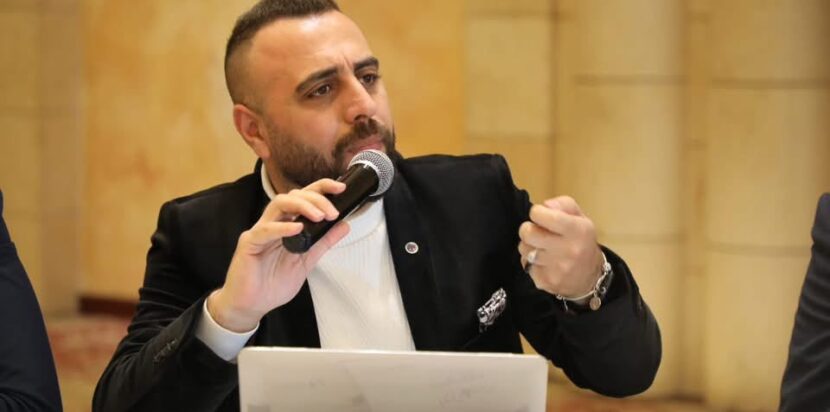
This article was written by Suhaib Ahmad Rababah, Executive Director of the Intermediaries of Change Center for Sustainable Development and Sawt Ajloun Community Radio, as a reading of the United Nations report and a comparison with the Jordanian context.


The world today is witnessing an unprecedented transformation in the nature of the relationship between the state and its citizens as a result of the rapid advancement of digital surveillance technologies, artificial intelligence, and big data analytics. While governments emphasize that these tools have become essential for combating terrorism, cybercrime, and strengthening national security, international warnings are increasingly highlighting the risk of their transformation into instruments for restricting civil rights and freedoms and shrinking democratic spaces.

In this context, the United Nations Human Rights Council, during its sixty-second session, discussed the Special Rapporteur’s report entitled “Exposing the Chilling Effects of Digital Surveillance on Freedom of Assembly and Association,” which warns that digital surveillance is no longer merely an exceptional measure but has become, in many countries, a routine practice that directly affects individuals’ freedom to organize, express themselves, and participate in civic life.

The report indicates that the most serious challenge facing the world today is not the existence of surveillance technologies themselves, but rather the normalization of their use, to the extent that they have become part of the routine practices of law enforcement agencies, often under broad justifications related to national security, counterterrorism, or the fight against cybercrime.

The report warns of several troubling trends, most notably the expansion of personal data collection without effective judicial oversight; the use of facial recognition technologies and artificial intelligence to monitor public spaces; the surveillance of activists, journalists, and human rights defenders; the creation of what is known as the “chilling effect,” whereby individuals refrain from exercising their rights out of fear of surveillance or prosecution; and the gradual erosion of the rights to freedom of assembly, association, and public participation.

The report does not oppose the use of technology to enhance security; rather, it emphasizes that any such use must be governed by the principles of necessity, proportionality, legality, judicial oversight, and accountability in accordance with international human rights law.


Turning to the Jordanian context, Jordan has witnessed a noticeable expansion in legislation related to the digital sphere in recent years, most notably the Cybercrime Law of 2023. This legislation emerged amid a growing rise in cybercrime, hate speech, and online blackmail—genuine challenges that require an effective legal response.

However, the law also sparked broad debate among civil society organizations, human rights advocates, and media professionals, particularly regarding certain provisions that were considered broad in scope or open to multiple interpretations, potentially raising concerns about their impact on freedom of expression and civic engagement.


Among the key issues discussed were the possibility of using some provisions to address political content or public criticism, as well as the impact of the legal environment on journalists, activists, and content creators.

In contrast, the Jordanian government affirms that the law is aimed at combating online blackmail, hate speech, and digital fraud, as well as protecting societal security, and that it is not intended to restrict constitutionally guaranteed freedom of expression.

Between these two positions, the real challenge remains how to achieve a balance between digital security and the protection of fundamental rights. One of the key messages of the UN report is that security should not come at the expense of freedoms. International experiences indicate that countries which have succeeded in combating cybercrime and terrorism have not relied solely on expanding surveillance powers; rather, they have built integrated systems based on: judicial independence, clear judicial warrants for surveillance, parliamentary and institutional oversight, protection of personal data, transparency in the use of surveillance technologies, and the availability of mechanisms for appeal and accountability.


For civil society, the impact of digital surveillance is not limited to privacy alone; it extends to the ability of organizations to operate freely. Fear of monitoring communications, meetings, or digital campaigns may lead some individuals to:

  • Reduce participation in public activities.
  • Refrain from joining associations.
  • Limiting political discussions.
  • Reducing volunteer work.
  • Avoid expressing opinions on public issues.

This is what the UN report calls the “declining effect,” meaning that fear alone is enough to reduce community participation even without direct measures against individuals.

Jordan is among the countries striving to accelerate digital transformation, enhance e-services, and develop the digital economy—a crucial direction for development. However, the success of this transformation requires, in parallel:

  • Strengthening laws protecting personal data.
  • Establishing the principles of digital governance.
  • Increase transparency in the use of monitoring tools.
  • Building citizens’ trust in institutions.
  • Ensuring that legislation does not unduly restrict civic or media spaces.

    Based on our experience at the Center for Change Agents for Sustainable Development and Ajloun Voice Radio, we believe that digital justice has become a natural extension of human rights, especially in rural and marginalized communities facing widening gaps in access to technology and digital participation.

The most important question remains: How do we build a digital system that enhances security and protects society without becoming a source of restricting freedoms?

Answering this question requires implementing fundamental reforms to the cybercrime law to help define the relationship between the state and its citizens in the digital age, and to foster a future based on trust, participation, democracy, and inclusive development in the coming years.

#Freedoms #DigitalJustice

🗣️ إخلاء المسؤولية: "إن محتوى هذا المنشور هو ضمن مسؤولية كتاب المدونة او المقال ولا يعكس بالضرورة موقف مركز وسطاء التغيير للتنمية المستدامة واذاعة صوت عجلون المجتمعية. جميع الحقوق محفوظة © يحظر استخدام أي جزء من محتوى هذا الموقع أو نسخه أو إعادة نشره أو نقله، كليًا أو جزئيًا، بأي وسيلة كانت، دون الحصول على إذن خطي مسبق من مركز وسطاء التغيير للتنمية المستدامة و/أو إذاعة صوت عجلون المجتمعية، وتحت طائلة المساءلة القانونية. ويُستثنى من ذلك الاستخدام الذي يتضمن الإشارة الصريحة والواضحة إلى المصدر.

Share:

Previus Post
Let’s think

Comments are closed

Recent Post

  • consua
    3 August، 2026
    The Intermediaries of Change Center for Sustainable Development Launches the Concept Paper for Local Dialogue Sessions under the “From Vision to Implementation” Project
  • consua
    3 August، 2026
    From “Aswatkon” to a Platform of Excellence… Congratulations to Ms. Hibatullah Musa Qureshi
  • consua
    28 July، 2026
    Conclusion of the Training Program for the “From Vision to Implementation” Project to Strengthen Youth Political Participation
  • consua
    27 July، 2026
    Launch of the First Activities of the “From Vision to Implementation” Project, Supported by the King Abdullah II Fund for Development
  • consua
    27 July، 2026
    A dialogue meeting within “Reef Space”… Political parties and youth discuss turning priorities into development policies and programs.

Recent Comments

No comments to show.
  • Agenda
  • Higher Education and Research
  • institutional work
  • Intermediaries of Change Center
  • News
  • Opportunities and Training
  • Releases
  • Sawt Ajloun Radio
  • Secretary General's Activities
  • translates to "Social and Civil Affairs
  • غير مصنف
  • 🌍 Economic Development and Employment – News
  • 🌍 Human Stories

Change Mediators Fellowship Internship Opportunities News Opportunities and Training Releases Rural Space Sawt Ajloun Radio Voices Heard Volunteer With Us 📢 Voices for Democracy

August 2026
S M T W T F S
 1
2345678
9101112131415
16171819202122
23242526272829
3031  
« Jul    

Subscribe to Our Mailing List

Subscription Form

About Us

  • Cities and Branches
  • Organizational Structure
  • Partners
  • Background
  • Sustainable Windows and Projects

Transparency and Accountability

  • Transparency and Access to Information
  • Investigation of Fraud, Corruption, and Misconduct
  • Public policies and regulations

What We Do

  • Economic Development and Employment
  • Higher Education and Research
  • Social and Civil Affairs
  • Water, Environment, and Blue Economy
  • Transport, Urban, and Cultural Development
  • Energy and Climate
  • قرار 2250 الشباب والسلام والأمن
  • قرار 1325 المرأة والسلام والأمن
  • 16 Days Campaign
  • Community Media

How We Work

  • Political Reference
  • Regional Platforms
  • Projects and Initiatives

Information Center

  • Press Corner
  • News
  • Agenda
  • Publications
  • Human Stories
  • Blogs and Opinions
  • Photo Gallery
  • Video Gallery

Work with Us

  • Job Vacancies
  • Seconded Staff
  • Internship Opportunities
  • Procurement
  • Expert List
  • Join as a Guest in Our Radio Episodes
  • Volunteer With Us

Our Facebook Page

Programming and Design by Hazaymeh Digital Services

All Rights Reserved © Center for Sustainable Development Brokers 2025

X-twitter Linkedin Facebook Instagram Youtube
  • العربية (Arabic)
  • English